
Dataset-30: UAV-Based Wireless USRP and LoRa Measurements from AERPAW Autonomous Data Mule (AADM) Challenge in Digital Twin and Real-World Environments
Lead Experimenter
Md Sharif Hossen, North Carolina State University
Link to Dataset
The dataset includes wireless link quality measurements collected using USRP radios and LoRa receivers during the AERPAW Autonomous Aerial Data Mule (AADM) challenge. The dataset also contains UAV telemetry and measurements collected in both digital twin and real-world experiments. The dataset can be accessed here [link].
Publications Using This Dataset
- M. S. Hossen, C. Dickerson, O. Ozdemir, A. Gurses, M. R. Sarbudeen, T. Zajkowski, A. M. Alam, E. Tucker, W. Bjorndahl, F. Solis, S. Javed, A. Kamath, X. Tang, J. J. Sadique, K. L. Hermstein, K. A. Mahmud, J. A. S. Viloria, S. Hawkins, Y. Cui, A. Dey, Y. Liu, A. Gurbuz, J. Camp, R. Ahmad, J. van der Merwe, A. I. Mohamed, G. Zussman, M. Kurum, N. Kamesh, Z. Guan, D. Pados, G. Skilvanitis, I. Guvenc, M. Sichitiu, M. Mushi, R. Dutta, “UAV-Based Wireless Multi-modal Measurements from AERPAW Autonomous Data Mule (AADM) Challenge in Digital Twin and Real-World Environments,” IEEE Data Descriptions, April 2026.
- S. Mishra, B. Bhargava, Z. Liu, S. Islam, “UAV-CAS: A Calibrated Digital-Twin Dataset for Intrusion Detection in UAV Swarm Networks,” arXiv preprint, January 2026.
- Sadaf Javed, Ali Hassan, Rizwan Ahmad, Muhammad Mahtab Alam, Md Sharif Hossen, Anil Gurses, Özgür Özdemir, “Autonomous UAV Trajectory Design and Evaluation for Data Muling in AERPAW Digital Twin,” Proc. IEEE Int. Conf. Commun. (ICC), May 2026.
- J. J. Sadique, M. R. Khan, A. S. Ibrahim, “UAV-aided fast data collection via machine learning using AERPAW’s digital twin,” Proc. ACM Workshop Wireless Network Testbeds, January 2025.
Equipment and Software Used
LoRaWAN-enabled IoT LoStik device, LoRaWAN gateways Located in (LW1, LW2, LW3, LW4, LW5), USRP B205 and B210, GNU Radio, UAV
Description
This unmanned aerial vehicle (UAV) wireless dataset was collected as part of the AERPAW Autonomous Aerial Data Mule (AADM) challenge, organized by the NSF Aerial Experimentation and Research Platform for Advanced Wireless (AERPAW) project. In the AADM challenge, an autonomous UAV acted as a data mule, downloading data from multiple base stations (BSs) in a dynamic wireless environment. Participating teams designed flight control and decision-making algorithms to determine which BSs to communicate with and how to plan flight trajectories to maximize data download within a fixed mission time.
The competition was conducted in two stages: Stage 1 involved development and experimentation using a digital twin (DT) environment, and Stage 2 consisted of final testing on the outdoor AERPAW testbed. The total score for each team was compiled from both stages. The resulting dataset includes link quality and data download measurements collected in both DT and real-world environments. Along with the USRP measurements used in the contest, the dataset also includes UAV telemetry, position estimates from Keysight RF sensors, link quality measurements from LoRa receivers, and Fortem TrueView R20 radar measurements (Fortem and Keysight RF data are described in AERPAW dataset 28).
This dataset supports reproducible research on autonomous UAV networking, multi-cell association and scheduling, air-to-ground propagation modeling, digital twin–to–real-world transfer learning, and integrated sensing and communication, and serves as a benchmark for future autonomous wireless experimentation.
Representative Results
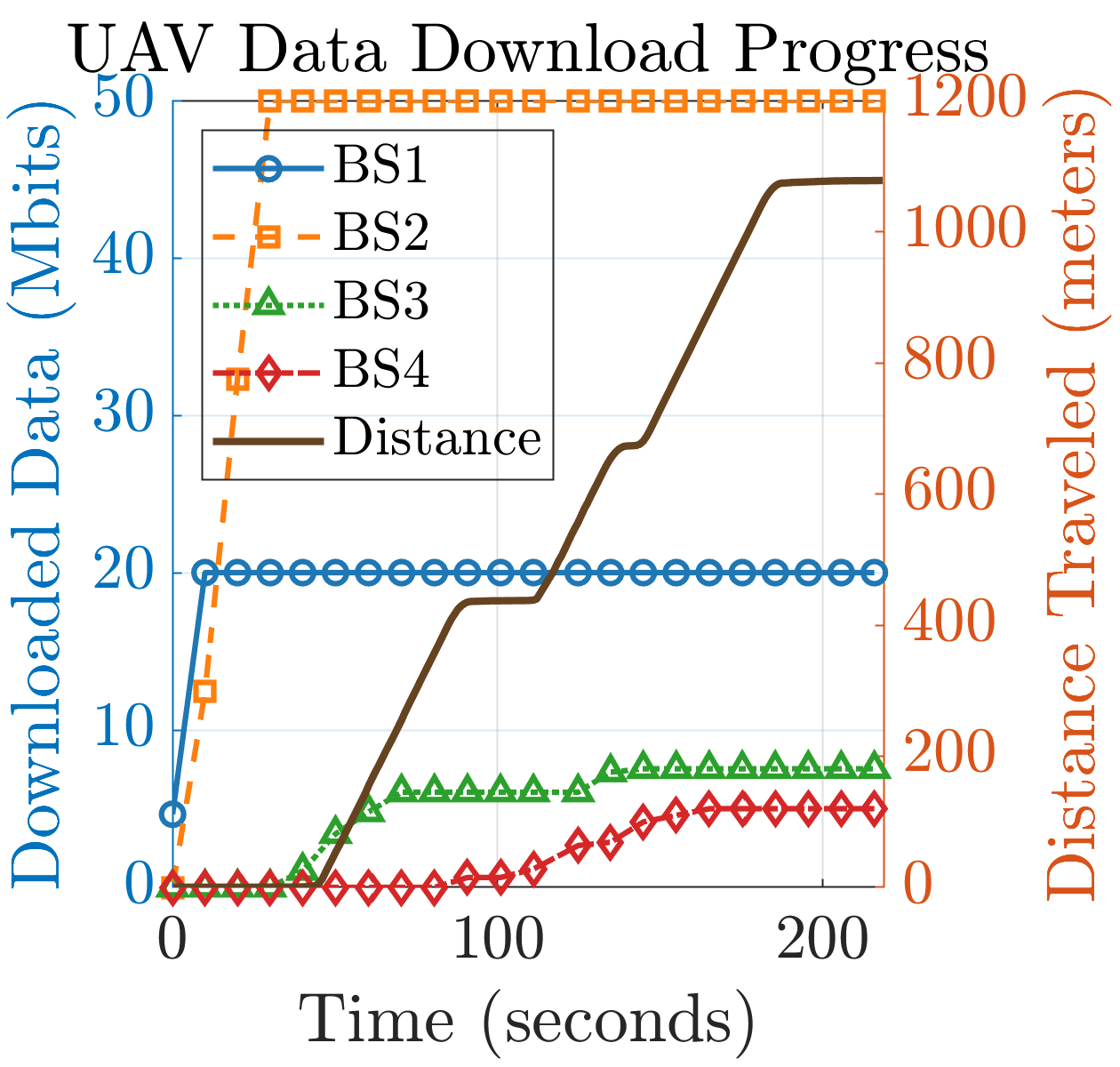
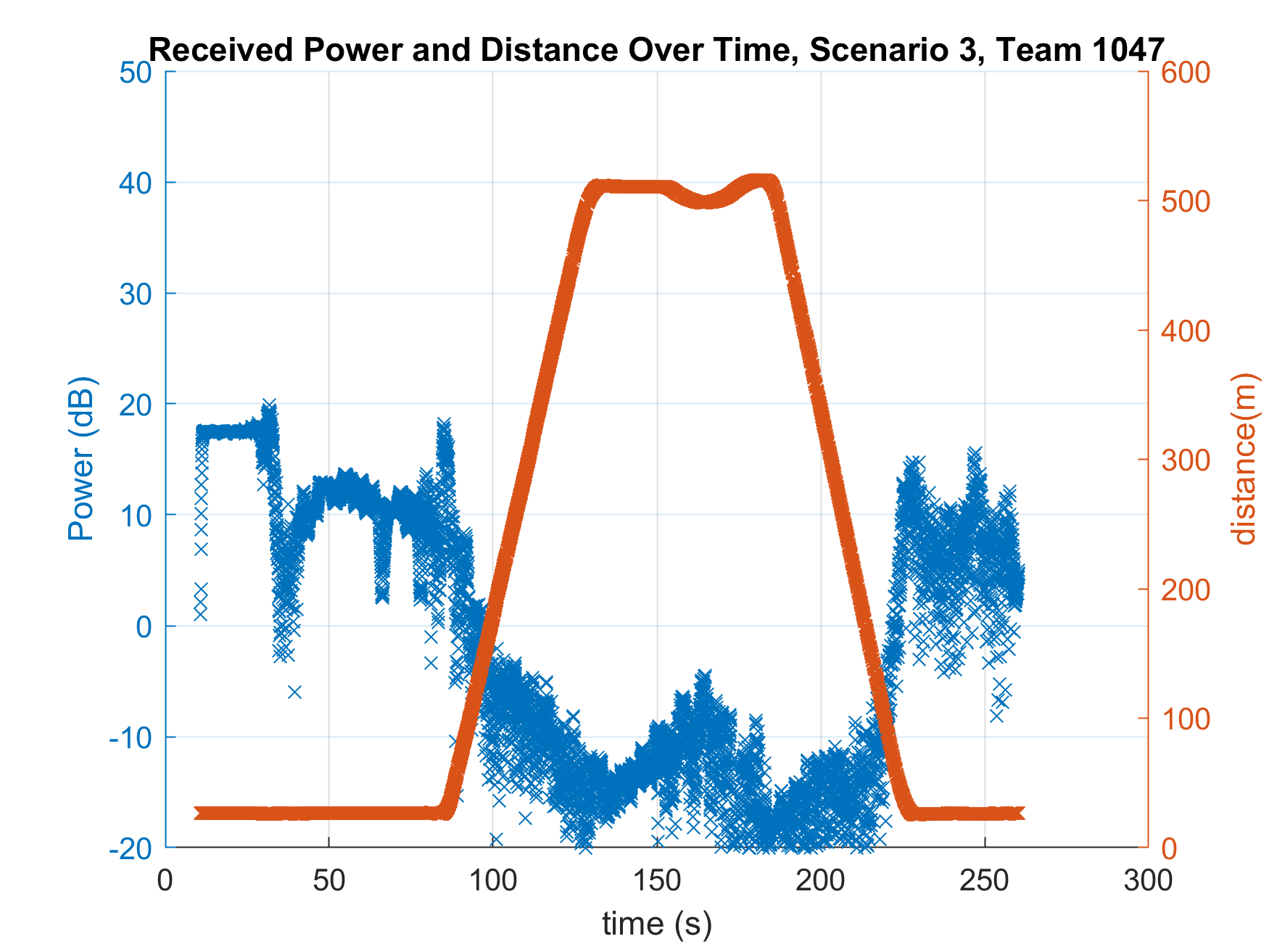
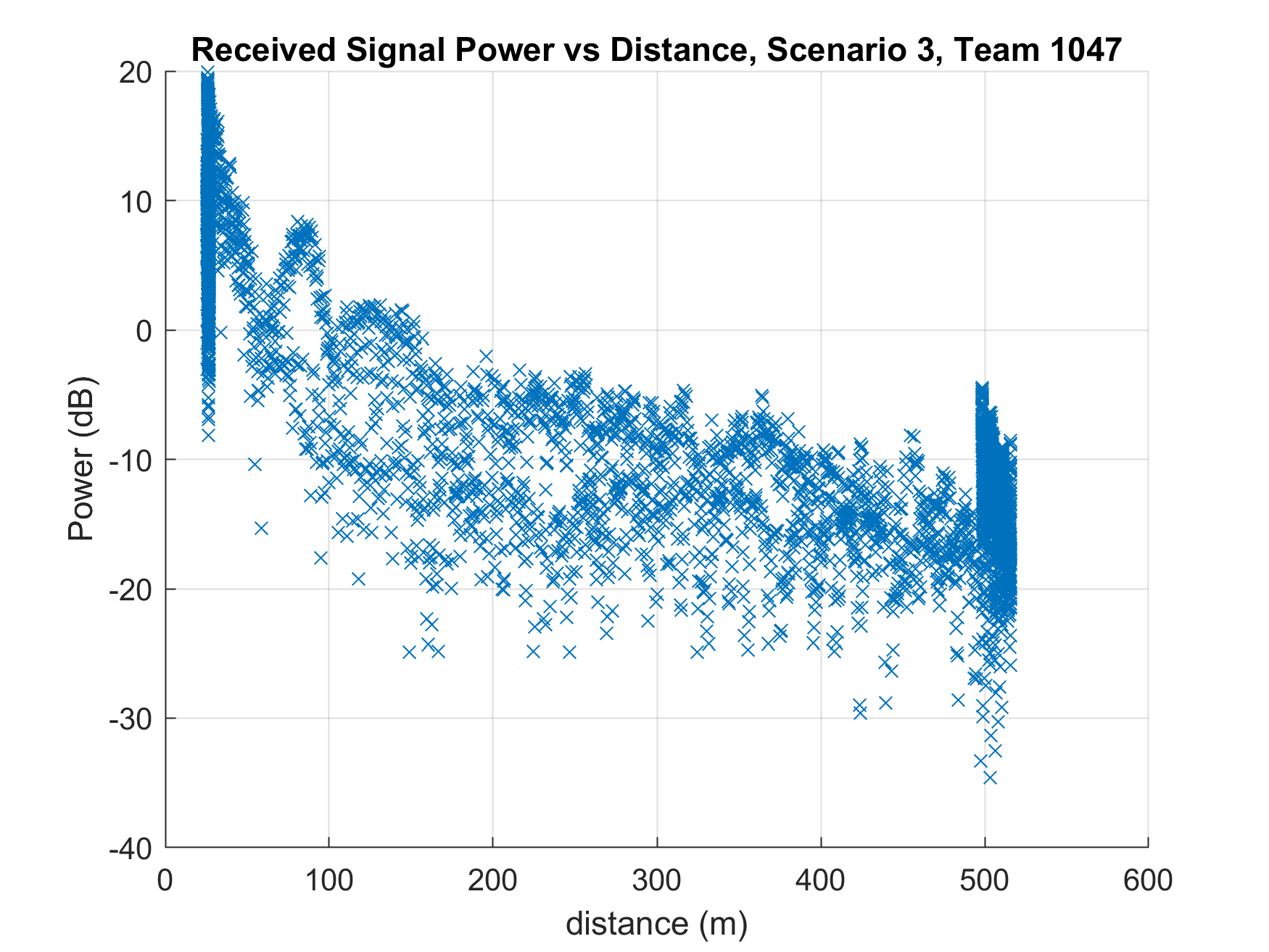
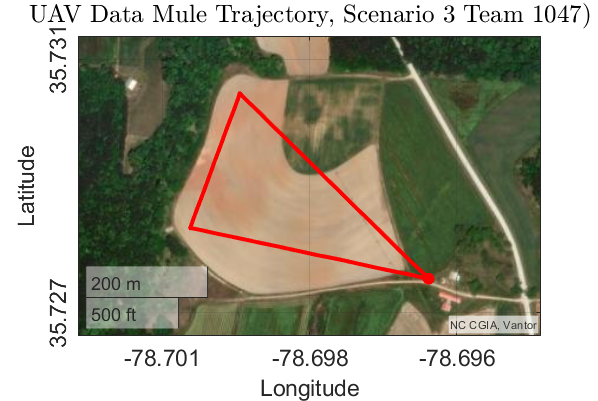
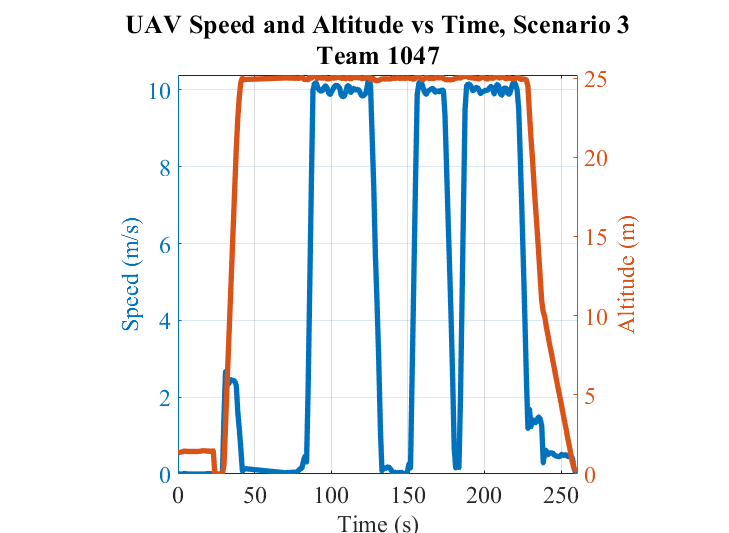
Representative results from the USRP dataset illustrate the UAV’s trajectory in satellite view, speed and altitude over time, received signal power as a function of time and distance, and the cumulative data downloaded from each base station alongside the total distance traveled during the mission. These results were obtained from Scenario 3 of Team 1047 and are easily reproducible using the scripts included in the post-processing files.
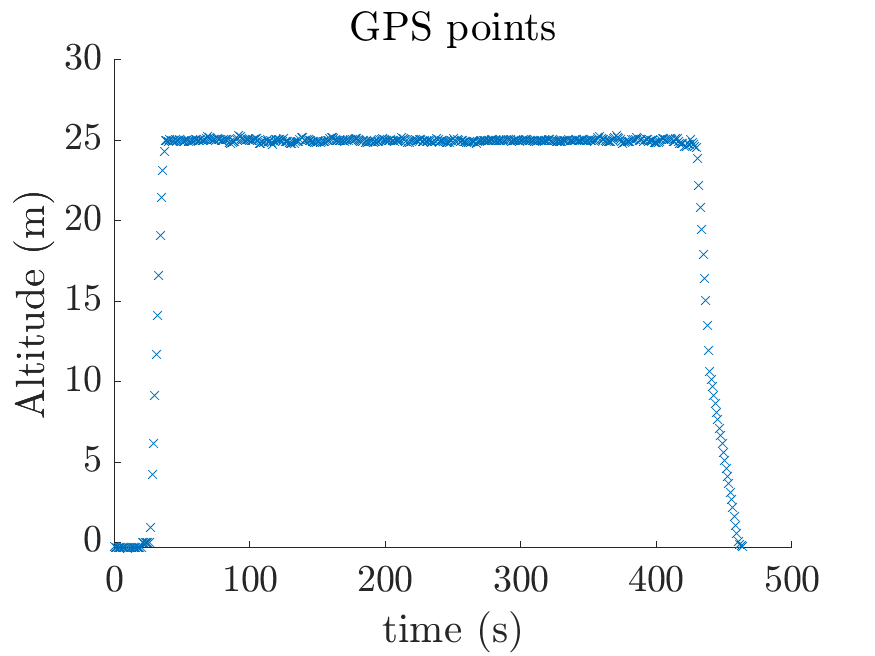
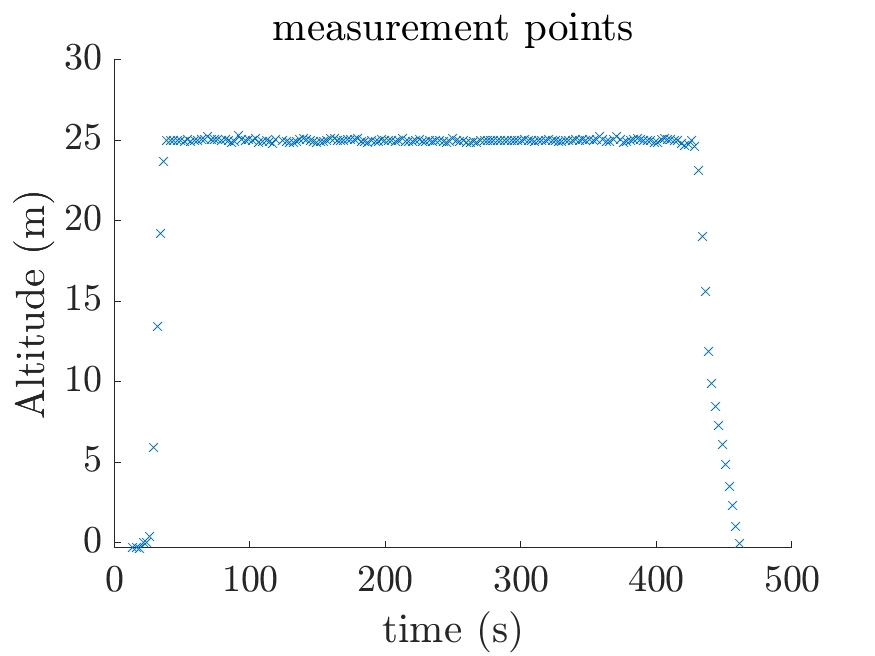
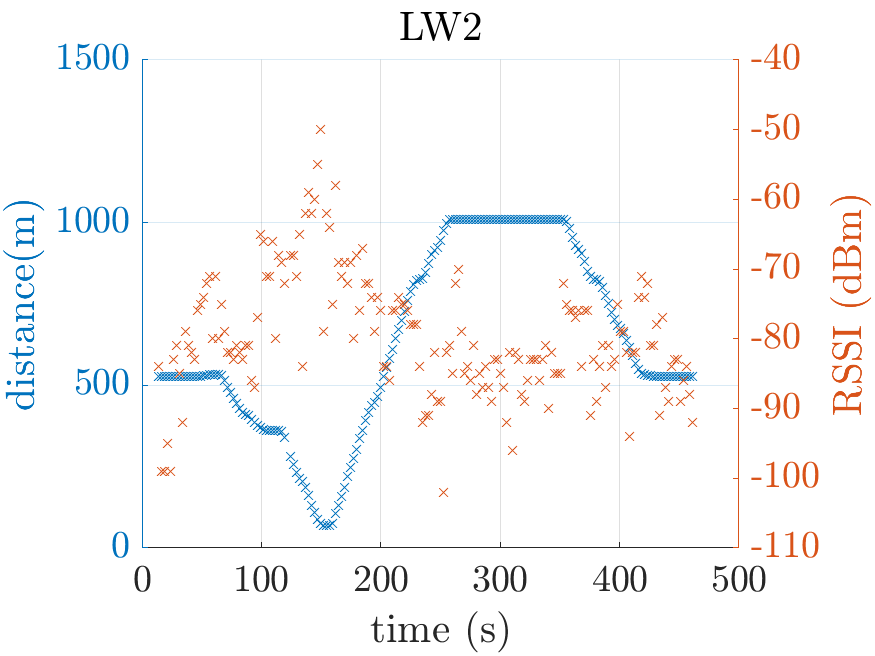
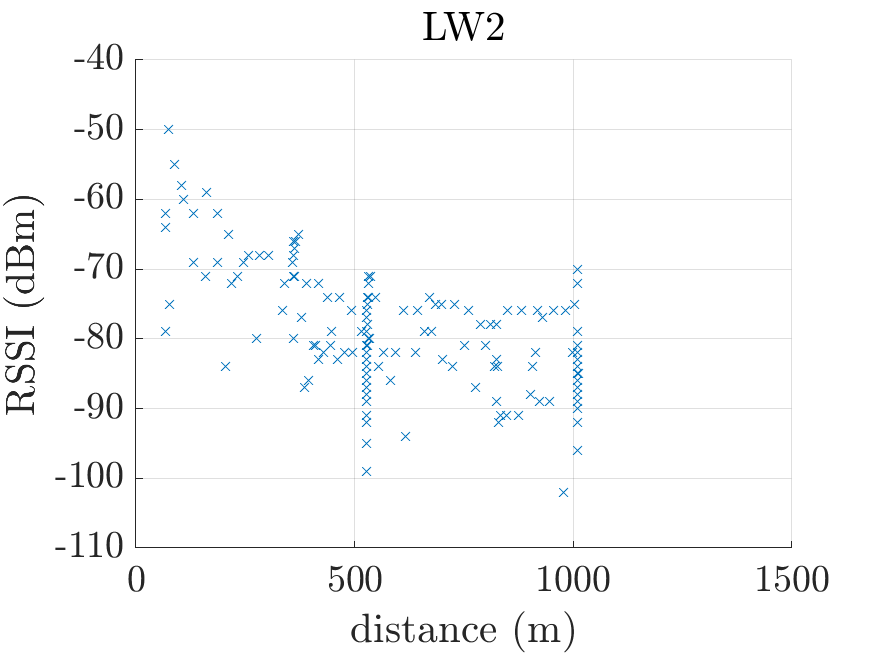
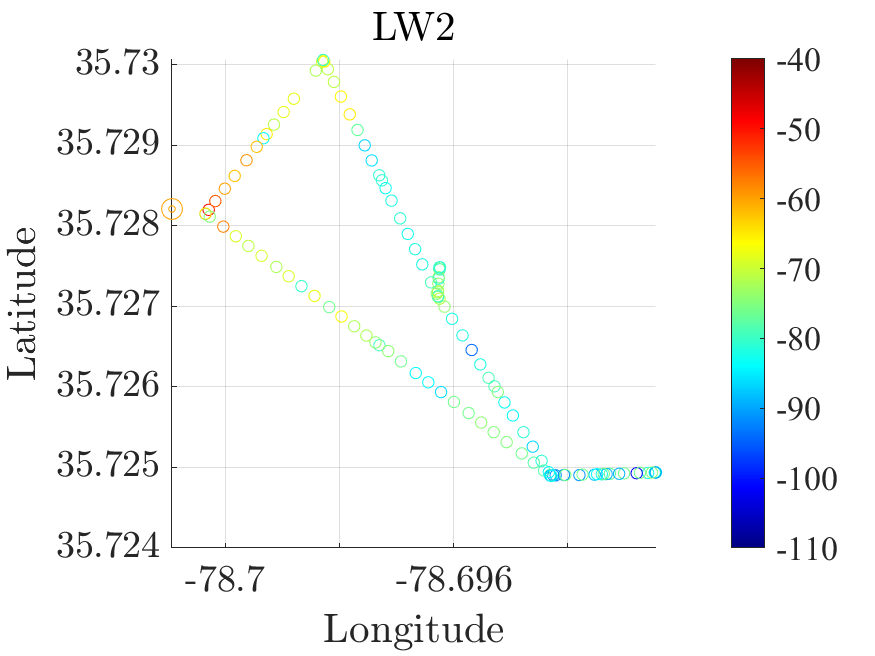
Representative results from the LoRa dataset illustrate the UAV’s altitude profile over time using both GPS and measurement timestamps, the received signal strength indicator (RSSI) as a function of time and distance from the base station, the relationship between RSSI and distance, and the spatial distribution of RSSI values along the UAV trajectory. These results were obtained from the LW2 base station and are easily reproducible using the scripts included in the post-processing files.
Potential use cases for this dataset include:
- Multi-cell scheduling and association policies
- Mission planning under energy and time constraints
- Fairness and quality-of-service across base stations
- Scalability and multi-agent scenarios