This month, researchers demonstrated significant progress in autonomous UAV network resilience through experiments conducted on the AERPAW testbed, part of the PAWR (Platforms for Advanced Wireless Research) program supported by the National Science Foundation.
As non-terrestrial networks continue to emerge as a key component of next-generation 6G connectivity, unmanned aerial vehicles (UAVs) are being explored as flexible and cost-effective infrastructure for providing coverage in remote, disaster-affected, and defense-critical environments. A key challenge in these systems is maintaining reliable communication under interference and dynamic conditions without human intervention.
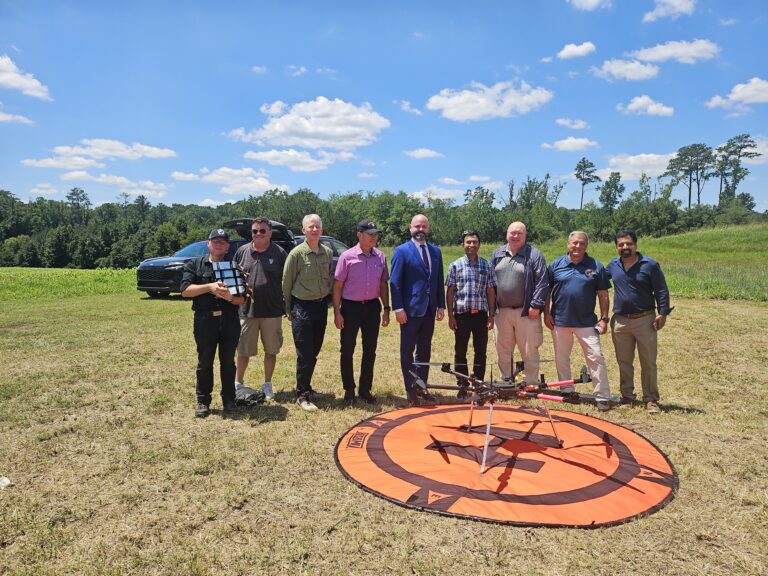
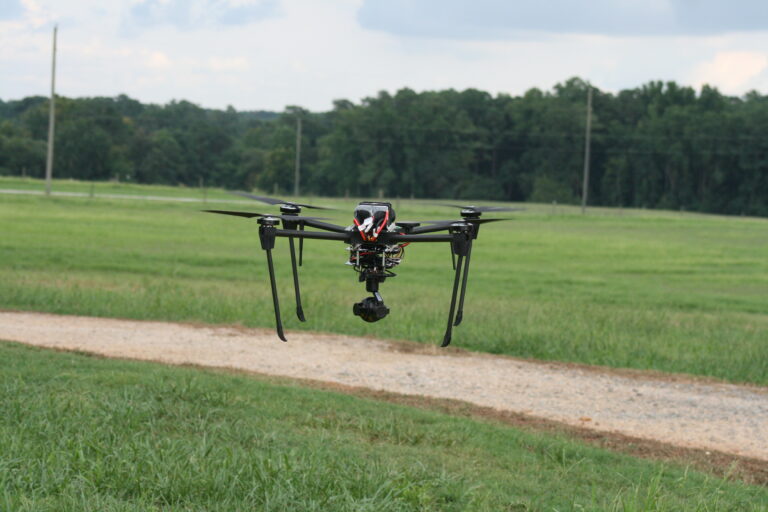
A collaborative research team from North Carolina State University, Lockheed Martin, and the Air Force Research Lab (AFRL) developed and tested a Resilient, Adaptive, Self-Healing Network Design (RASHND) for UAV swarms. The work progressed through multiple stages, starting with lab-based simulations, followed by controlled outdoor radio experiments using tripod-mounted equipment, and culminating in real-world UAV flight validation on the AERPAW testbed.
Key Takeaways
- UAV swarms can automatically adapt to link failures and interference
- Device-to-device communication improves coordination and stability
- The RASHND approach significantly increases network resilience in real-world conditions
- AERPAW provided critical validation beyond simulation and lab testing
Why It Matters
As UAV-based networks become increasingly important for future wireless systems, particularly in 6G and beyond, validating performance in realistic environments is essential. AERPAW continues to enable this transition by providing a large-scale, outdoor wireless research platform for end-to-end experimentation.
This experiment reinforces the role of autonomous, self-healing network architectures in enabling robust aerial communication systems that can operate reliably under unpredictable and high-interference conditions.